
| HS Code | 240396 |
| Chemical Name | Lupranate Isocyanates |
| Appearance | Clear to pale yellow liquid |
| Odor | Pungent |
| Chemical Family | Aromatic isocyanate |
| Main Component | Methylene diphenyl diisocyanate (MDI) |
| Cas Number | 101-68-8 |
| Molecular Weight | 250.25 g/mol |
| Boiling Point | 197°C (decomposes) |
| Density | 1.22 g/cm³ at 25°C |
| Flash Point | 199°C (closed cup) |
| Solubility In Water | Reacts with water |
| Vapor Pressure | 0.0005 mmHg at 25°C |
| Viscosity | 150-250 mPa·s at 25°C |
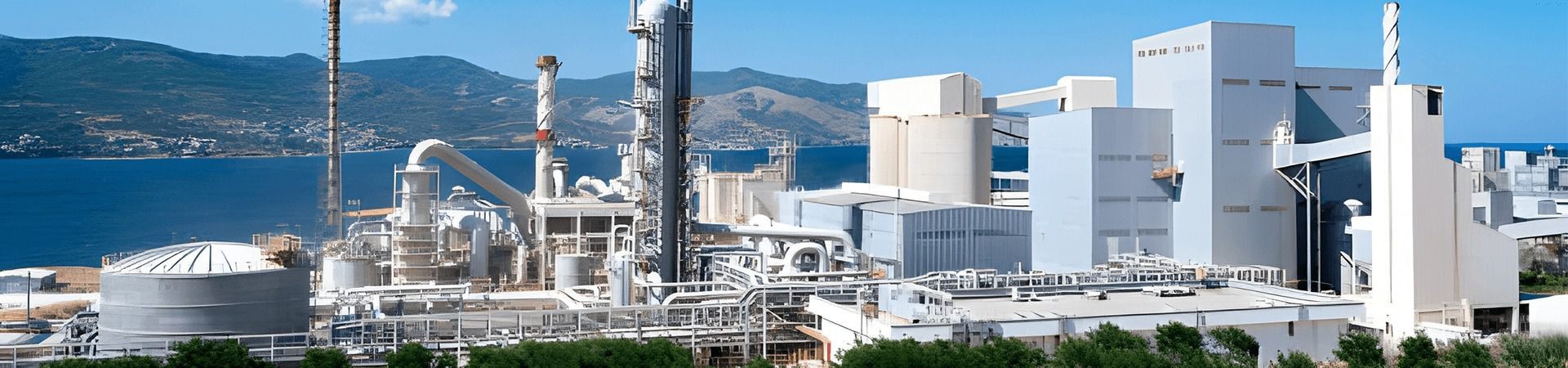
As an accredited Lupranate Isocyanates factory, we enforce strict quality protocols—every batch undergoes rigorous testing to ensure consistent efficacy and safety standards.
| Packing | Lupranate Isocyanates are typically packaged in 250 kg net weight steel drums with secure, chemical-resistant linings for safe transport and storage. |
| Container Loading (20′ FCL) | Container Loading (20′ FCL): Loads 80-100 drums or 16-20 MT of Lupranate Isocyanates, following strict safety and segregation standards. |
| Shipping | Lupranate Isocyanates are shipped as hazardous materials due to their toxic and reactive nature. They must be transported in tightly sealed, properly labeled containers, following all local, national, and international regulations. Adequate ventilation, temperature control, and spill containment measures are essential during shipping to ensure safety and compliance. |
| Storage | Lupranate Isocyanates should be stored in tightly sealed containers, in a cool, dry, and well-ventilated area away from direct sunlight, heat, moisture, and incompatible substances such as amines, alcohols, and water. Temperature should be kept below 30°C (86°F). Properly label storage areas and use spill containment. Protect from physical damage and ensure only trained personnel handle the chemical. |
| Shelf Life | Lupranate Isocyanates typically have a shelf life of 6–12 months when stored in unopened, original containers under recommended conditions. |
Lupranate Isocyanates play a key role as a reactive intermediate in various sectors, primarily used for synthesizing polyurethanes and specialty materials. Below, we detail real-world industrial scenarios where manufacturers utilize this raw material, including application-specific regulatory requirements, authentic formulation data, production process integration, and the spectrum of resulting end-products.
Construction material producers incorporate Lupranate Isocyanates directly in the formula for closed-cell rigid foams, which deliver high thermal insulation and structural integrity. The formulations demand precise index control and reactivity, as the isocyanate content drives foam density, mechanical strength, and dimensional stability. Compliance to mandated fire resistance and insulation performance standards dictates both formulation design and downstream processing parameters, impacting quality and safety certifications for the resulting insulation panels distributed globally.
Industry compliance standards
Typical usage ratio
Downstream process integration
Final product types
Manufacturers in furniture and automotive sectors consistently utilize Lupranate Isocyanates to adjust comfort and durability attributes in flexible foam fabrication. Here, isocyanate incorporation precisely targets reaction kinetics and foam resilience, minimizing volatile organic emissions while complying with health and safety benchmarks. Control over cell morphology and compression set is critical to achieving finished products capable of passing regulated fatigue and fire safety tests across markets worldwide.
Industry compliance standards
Typical usage ratio
Downstream process integration
Final product types
In the coatings industry, Lupranate Isocyanates function as a crosslinking agent in the synthesis of two-component polyurethane coatings, allowing manufacturers to produce flooring and metal protection systems with controlled cure rates and chemical resistance. Accurate dosing ensures a balance between hardness, impact resistance, and flexibility, while regulatory compliance dictates permissible isocyanate emissions, VOC content, and worker safety measures during application and curing.
Industry compliance standards
Typical usage ratio
Downstream process integration
Final product types
Producers of technical elastomeric products depend on Lupranate Isocyanates for the synthesis of durable microcellular and solid polyurethane elastomers. These materials require strict isocyanate content control to achieve optimized abrasion resistance, tensile strength, and dynamic load endurance. Industrial users focus on batch traceability and conformance with mechanical performance standards necessary for product approval in demanding infrastructure and equipment applications.
Industry compliance standards
Typical usage ratio
Downstream process integration
Final product types
In the adhesives and engineered wood sector, Lupranate Isocyanates are essential as cross-linkers in high-performance polyurethane adhesive systems that must satisfy moisture-curing, bond strength, and chemical durability controls. Precise formulation enables control over curing rates and bond open times, while strict adherence to local and international emission standards—particularly related to residual monomers and formaldehyde—is mandatory for downstream certification and market acceptance.
Industry compliance standards
Typical usage ratio
Downstream process integration
Final product types
Manufacturers utilize Lupranate Isocyanates in the production of integral skin polyurethane foams, specifically for molded automotive dashboards, steering wheels, and ergonomic grips. Moisture and temperature control during injection and curing is critical as the isocyanate content governs surface density and durability. Compliance with automotive OEM material and emission standards ensures product acceptance, with production flexibility allowing for varied wall thickness and performance specifications in finished goods.
Industry compliance standards
Typical usage ratio
Downstream process integration
Final product types
Competitive Lupranate Isocyanates prices that fit your budget—flexible terms and customized quotes for every order.
For samples, pricing, or more information, please contact us at +8615380400285 or mail to sales2@ascent-chem.com.
We will respond to you as soon as possible.
Tel: +8615380400285
Email: sales2@ascent-chem.com
Flexible payment, competitive price, premium service - Inquire now!
Daily production in our plant revolves around a core group of chemicals, with isocyanates ranking among the most rigorous. Lupranate isocyanates have held our focus for years, and we have seen firsthand how these ingredients drive advanced polyurethane chemistries across industries. Since we handle Lupranate at scale, we recognize both its transformative potential and the precautions that define responsible manufacturing.
Lupranate refers to a specific line of aromatic diisocyanates, which includes grades such as Lupranate M20S, Lupranate M70L, and technical blends tailored for rigid foams, adhesives, coatings, and elastomers. These materials come in varying compositions—pure monomeric MDI, polymeric MDI, prepolymers, and specialty blends—each offering a different balance of reactivity, viscosity, and downstream mechanical strength. Blends with higher monomer content often favor rigid foam insulation boards for structural integrity, while flexible foam manufacturers count on modified versions for balancing open-celled softness with resilience. We measure monomer content, NCO percentage, and viscosity each batch, using equipment such as FTIR and rotational viscometers, since small changes influence the craftsmanship of the end product.
Every day in our operation, storage environment plays as big a role as the chemistry itself. Lupranate isocyanates respond readily to moisture, triggering rapid reactions that generate solids and render containers useless for subsequent production. We stick to tight controls on humidity, running dry nitrogen blanketing and sealed transfer lines during bulk handling. Cleanliness of tanks, hoses, and valves is not negotiable—residues from previous runs or water ingress directly impact yield and consistency. It sounds like small detail, but poor handling can cost a plant thousands in wasted material, not to mention the frustration for operators troubleshooting unexpected pressure in storage silos.
Lupranate isocyanates deliver more than a handful of basic benefits. From our experience, the biggest draw comes from flexibility in tuning mechanical properties—adjusting the ratio of Lupranate MDI to polyol lets composite makers shape cellular structure, rigidity, and thermal insulation. Engineers working on composite panels, construction foams, and automotive seating turn to us for advice on which grade gives the thermal conductivity or rebound strength their products are designed to achieve. Purifying the base materials and ensuring consistent lot-to-lot NCO values takes effort on our end, but it simplifies downstream manufacturing and troubleshooting for end users.
Many of our clients in construction appreciate the low-odor character and bonding strength of Lupranate prepolymers. These variants lend themselves well to insulation boards that must pass indoor air quality standards, as the reduction in residual monomer keeps VOC emission in check. Appliance foam production relies on a carefully metered supply of aromatic isocyanates. Here, the cell size distribution, closed-cell ratio, and compressive strength all hinge on the purity and reactivity of the Lupranate batch. Even small variations in viscosity can throw off automated spray foaming lines that meter chemicals by mass flow sensors, so we spend effort dialing in acceptable tolerances.
Our adhesives and elastomers customers push for blends that work at room temperature and cure on fast-moving assembly lines. Not all isocyanates are created equal—modifications to the Lupranate backbone influence cure speed and final bond strength. Low-viscosity prepolymers flow into small joints, while higher molecular weight versions cater to gap filling and sealant applications. Uniform dispersion in polyol partners marks the difference between reliable adhesives and products that fail aging or peel testing. Our laboratory teams continually chase better shelf-life, water resistance, and handling safety for customers in packaging, footwear, and electronics.
Customers sometimes ask why we offer Lupranate alongside other market isocyanates. The answer rests in processing behavior and end-use match. TDI products, for example, bring faster cure cycles and lower viscosity, so footwear makers often pick them for flexible foam. MDI-derived Lupranate excels in structural foams, rigid insulation, and automotive uses, thanks to denser crosslinking and compressive strength. Our plant produces both types but Lupranate runs see tighter emissions control, due to the greater sensitivity of MDI products to water, amines, and heat during mixing.
From the manufacturer’s standpoint, Lupranate is easier to ship and store under controlled temperature, since it remains in liquid form above freezing and below forty centigrade. TDI, on the other hand, flows better in cold climates but needs venting to manage pressure buildup. Customers switching from other isocyanates notice these differences in practical terms: Lupranate’s lower volatility and odor profile favor use in staffed workshops or confined assembly processes. Lower free monomer grades minimize health risks, something our safety teams prioritize by running exposure tests on the filling and drumming floor. Field reports from insulation board factories show operators prefer handling Lupranate drums due to reduced fume generation, resulting in fewer workplace complaints.
Blending flexibility also sets Lupranate apart. Our blends with various NCO contents let users fine-tune physical properties without needing to adjust whole production lines. High-functionality versions handle challenging formulations—fire-rated panels, sandwich boards, and vibration-damping elements. By working closely with downstream manufacturers, our process engineers can modify the isocyanate distribution to enhance performance in specific commercial foam systems or adhesives.
Not every end user gets to see the raw details that preoccupy us during manufacturing. Our M20S variant, for instance, shows up with an NCO content around 31.5 percent and a viscosity of 200 mPa.s at twenty-five degrees Celsius. Polymeric blends carry higher viscosities, which we adjust via advanced distillation and blending routines to match downstream mixing requirements. We maintain a focus on color index (typically less than fifty APHA for pure grades) and acidity (often below 0.1 mg KOH/g) since impurities can destabilize formulated systems further along the chain. Color stability helps clarify that the material stays uncontaminated, and low acidity avoids degradation of sensitive polyols.
Every shift, operators track these numbers using in-line sensors and batch sampling, reporting if any sign of hydrolysis or contamination emerges. We’ve spent years working to narrow lot-to-lot variation; a typical customer expects the same foam rise and cure on every delivery. Technical support engineers track each customer’s feedback to pinpoint where small quality escapes might affect line throughput or yield. Consistency enables large processors to eliminate unnecessary testing and run lines longer between maintenance cycles.
Handling our own logistics, we use drums, IBCs, and tank trucks fitted with active heating systems to keep the Lupranate grade in liquid phase along the supply path, especially during winter. Storing Lupranate too cold crystallizes the material, so our warehouses run air handling that never goes below fifteen centigrade. Upon delivery, our technical teams work with customers to check transfer lines, warming coils, and filling speeds, which minimizes blockages and generates fewer maintenance headaches for production floor managers.
As a manufacturer, workplace safety links directly to the chemistry of Lupranate isocyanates. Strict controls on vapor emissions, splash prevention, and protective equipment go beyond regulatory minimums. Training shifts focus from just label reading to understanding the reactivity—accidents can occur if drums are opened without checking moisture in the air or if a transfer pump leaks during a seasonal changeover. We pay close attention to these practical realities, drawing up working procedures based on incidents reported across global sites.
Tight health exposure limits remain important for isocyanate producers. Regular air monitoring, skin protection routines, and direct feedback from operators lead our plant safety policies. In the event of accidental spillage, our systems kick emergency response plans into action: on-site neutralizers, ventilation upgrades, and alarm systems prevent minor leaks from becoming costly clean-ups. Frequent simulation drills build confidence and accuracy during real emergencies. While many companies hand off this responsibility to distributors, we see it as integral to our identity and trust with customers.
Customers bring new challenges every quarter—lighter vehicles, stricter flame tests, push for greener materials. Lupranate formulations allow us to support sustainable targets, particularly by enabling low thermal conductivity foam for building insulation. Lowering carbon footprint in rigid foams involves stricter control over isocyanate content, blowing agent compatibility, and catalysis. Our plant trials new bio-based polyol partners for Lupranate, tracking compostability and emission reduction. We build direct relationships with end users through application support, troubleshooting, and customized blends, something third-party resellers cannot provide at the same technical depth.
Electric vehicle battery enclosures, for instance, require high-strength, non-flammable rigid foam. Recent projects relied on Lupranate M70L blended with flame retardant additives, adjusted for exotherm control and expanded curing windows. Support teams ran parallel trials with automotive groups, adjusting index and catalyst dosage to keep production flowing without introducing defects. On furniture foam lines, consistent isocyanate batch quality results in fewer voids and a softer feel, elements that drive better returns for the end customer. Our input starts at the formulation drawing board and extends through every run on the production floor.
Regulatory landscapes shift every year, with new restrictions on free monomer content and occupational exposure limits. As the regulatory bodies phase down toxic substances, Lupranate grades evolve alongside. Our development chemists reformulate to minimize free MDI monomer, adapting purification columns and stabilizer packages to comply in each region. End users see lower HSE risk on their lines, making audit compliance less stressful. Meeting these targets takes investment in advanced manufacturing—reactor metallurgy upgrades, new automation systems, and online compositional analysis—factors never visible from the outside but essential to keep Lupranate relevant for top-tier applications.
Environmental responsibility no longer stays an afterthought. We include recovery systems for VOCs, recycle cleaning solvents, and run water treatment designed for high-isocyanate effluent. Our transparency about emissions and waste streams allows downstream users to calculate total life cycle impacts, often helping their own green certifications. Stakeholders expect us to drive these advances long before regulations force the industry’s hand.
Every customer wants a stable, reliable input—something that performs the same in January as it does in July. As the manufacturer, we know which subtleties in raw materials and environment can make a difference. Sourcing, storing, and blending isocyanates is not a hands-off process. We live through production runs that go off-spec from a batch with impurity drag-ins, or a supplier that fudges analytical results on incoming materials. Real-time measurement and full traceability cut down on uncertainty, allowing end users to respond to new projects and regulations with confidence.
Technical support is more than a hotline—engineers from our plant regularly troubleshoot mixing, curing, and application problems on-site, feeding insights back into the blending and purification routines. We see the actual color, viscosity, and reactivity on every delivery, so when complaints or requests come in, improvements run on a tight loop. No third parties dilute these lessons, which is why customers who depend on their own downstream consistency stick with direct manufacturers.
Lupranate is not just an ingredient, but part of a larger effort to enhance workplace safety, performance consistency, and environmental responsibility. Our work doesn’t end at the tank farm; it stretches all the way to the molded seat, insulation board, or adhesive bead at the other end. Only hands-on manufacturers recognize every link in that chain, connecting each property and performance target back to the chemistry and process work at our own site.
Upcoming changes in energy use, construction standards, and sustainability push us to keep refining our Lupranate processes. We collaborate with partners on new formulation targets—zero-ozone foams, recyclable rigid panels, non-yellowing elastomers—responding to field data and evolving building codes. Sometimes, batch failures and formulation missteps provide the best guidance on how to adjust purification routines, storage conditions, or final blend ratios. Real communication with users, not templated datasheets, shows us what matters most on the actual production floor.
Direct involvement means learning straight from the point of use, fixing bottlenecks, and proposing improvements that save time, reduce scrap, and boost product appeal. Our plant crews invest time on troubleshooting and knowledge sharing, helping customers build better output from the same set of ingredients. This makes Lupranate less about what it is as a raw material and more about how it moves innovation and reliability across a changing industrial landscape.